1 Post Office Road

Waldorf, MD 20602

Open 6 Days a Week

Schedule Appointment

Non-Surgical Spinal Decompression: Is it Right For You?

Pain, pain go away!

Sometimes, I come across patients who have suffered a pain condition for a long time that no therapies have resolved, despite our best efforts. It can be frustrating, debilitating and depressing to get no relief. Fortunately for some conditions, I’m able to recommend a treatment alternative that has been very successful for many of my patients: non-surgical spinal decompression.

Spinal decompression is a therapy designed with the goal of alleviating pain and promoting healing of the intervertebral disc. It’s recommended for sufferers of many types of back pain, neck pain and arm/leg pain, tingling and numbness associated with spinal nerve irritation.

It’s not appropriate for every pain condition, but it is a tool in our toolbox of pain treatment. So let’s take a look at non-surgical spinal decompression for pain relief and you can decide if it’s something to discuss with your physician.


How spinal decompression works

In a nutshell, spinal decompression stretches the spine by having the patient lie on a traction table (or similar motorized device). The device stretches and relaxes the spine intermittently in a controlled fashion. The thinking behind this approach is that if we create negative pressure within the disc itself, a couple of things can happen.

First, the process can retract or reposition the herniated or bulging disc material back into the disc. But also, it can promote the influx of healing nutrients into the disc, which will foster a better environment for healing to occur.

We conduct this treatment right in our office. During this therapy, patients lie on the traction table (either face up or face down, depending on the area of treatment and patient comfort).

non-surgical spinal decompressionFor the low back, a harness is placed around the hips and is attached to the foot side of the equipment. The lower half of the table slides back and forth with a back and forth with a setting of a calculated number pounds of force while the upper portion remains fixed, creating an alternating axial decompression and rest. For the neck, the patient rests their head in a comfortable neck cradle while a specific number of pounds of pressure pulls the head and neck gently alternating between axial decompression and rest.

Many of my patients wonder if this process is painful. The answer is no. If you are having spinal decompression therapy, you should feel no pain during or after the treatment and only a stretching sensation in the spine.


“I really enjoy having decompression as an option for patients with arm or leg pain, tingling or numbness that is not responding to chiropractic and physical therapy. We really don’t like have to send a patient for a surgical consultation. For those few patients who aren’t getting well with chiropractic and physical therapy, the decompression typically works well and we can avoid sending them to a surgeon,” said Dr. Sharman


Treatment length and associated costs

Most spinal decompression therapy involves anywhere from 10 to 20 treatments, lasting about 15 minutes each. Best results are achieved by having treatment 3 to 4 times a week at least for the first 10 sessions. In our office, the cost is $40 per session. Patients can receive 15% off if they purchase a package of 10 for $340, making the session $34 a visit. We do not bill insurance for spinal decompression.

Like most pain relief therapies we recommend, I also encourage other therapies to go along with spinal decompression to help it be more effective. This may include electric stimulation, ultrasound, cold/heat therapy applied during or after spinal decompression treatment. I also find myself recommending that patients drink up to a half-gallon of water each day, rest (always), participate in a nutritional supplement protocol and perform exercises on their own to increase their strength and mobility.

Getting rid of pain doesn’t happen overnight – so patients that are a good fit for spinal decompression need to be prepared for a many weeks process and a commitment to follow the treatment approach I recommend.


Pros/Cons – and success rate for spinal decompression

You may know someone who has had spinal compression therapy. The concept has been around for a number of years, but there has not been enough clinical evidence to support the claims of its effectiveness. However, many believe that the positive results of the patients speak for themselves. And countless chiropractors have been using spinal decompression – with positive results – for over ten years.

Pros

  • Overall reduction in pain and ability to return to daily activities
  • May start getting relief after five or six treatments
  • May have reduction in the size of the disc herniation
  • Avoid surgery and drugs
  • Safe, with no pain and little if any side effects

Cons

  • Lasting relief may not happen until protocol is finished, which may be four to six weeks
  • Protocol may require as many as four visits per week
  • Can get expensive, due to the number of treatments


Final verdict

Like many treatment options, non-surgical spinal decompression won’t work for everyone. And for certain groups of people, such as pregnant women, people with metal hardware in the area of treatment and others, it’s not an option. However, for those who DO qualify and have the right pain condition to respond to spinal decompression, it can be the pain relief answer they’ve been looking for.

My hope is that we will continue to invest in clinical research into this therapy so as to present more evidence to show what we, as chiropractors, have experienced with our patients. If you think spinal decompression is an approach you’d like to consider for relieving your pain condition, please let me know. Schedule a free consultation to see if you are a candidate for decompression. If I think it’s a good fit and will benefit you, we’ll work together to assemble a treatment plan.

 

Dr. Sharman

Dry Needling for Pain Relief: A New Tool for Your Pain Toolkit

Believing that needles can actually REDUCE one’s pain may sound far-fetched to some of you.

We don’t typically think of something we associate with getting shots as something that can reduce or remove our pain. However, dry needling is helping a lot of pain sufferers feel better – and we now offer this pain relief technique at Life Care!

With the addition of our new doctor of chiropractic, Dr. Betel Aklilu, we now have a practitioner experienced in dry needling. We sat down with Dr. A to get answers to the types of questions you might have about dry needling so we can educate our patients on the technique.


Dry needling explained

For starters, the needles are dry. The reason the needles are described as “dry” is that they do not involve injecting any type of medication into the skin. Thin, solid needles are inserted into the skin at the myofascial trigger points of muscles. Specifically, the needles penetrate the taut band of skeletal muscle located within a larger muscle group. The purpose of the needle placement is to create a relaxation response and increase range of motion within the muscle group.

Dr. A got interested in dry needling because she saw it as a simple, non-invasive yet effect way to improve pain.

“I had seen other providers use it to enhance healing of their patients, and I wanted to do the same. I have always been passionate about finding holistic, safe, effective treatments for treating pain. Dry needling is widespread in Europe and other parts of the world but it is still fairly underutilized in the United States. Dry needling therapy treats soft tissue (muscle, tendon, ligament) dysfunction and has proven remarkably effective in treating a vast number of myofascial syndromes,” shared Dr. A.

The needles used to perform dry needling are similar to acupuncture needles – but be clear, dry needling is very different than acupuncture. Acupuncturists insert needles to release endorphins and affect the nervous system, aligning a person’s “chi” or healing energy. Dry needling is really about muscles – and relieving the tightness and pain with needle placement.

“This therapy is based on palpatory findings and an understanding of anatomy, physiology, and neurology. Thus, it is a separate system of healing unrelated to the laws and philosophy of acupuncture,” said Dr. A.


Good candidates for dry needling

Certain pain conditions respond better to dry needling than others. Practitioners believe dry needling can be effective for the following conditions:

  • Neck, back and shoulder pain (i.e., whiplash, frozen shoulder)
  • Arm pain, such as tennis elbow
  • Migraine and tension headaches
  • Hip, buttock and leg pain (i.e., sciatica)
  • Muscle spasms

Dry needle therapy cannot be done on areas of open wounds or over a pacemaker. It is not recommended during high-risk pregnancies or for patients with needle phobias or genetic bleeding disorders.


Reasons to try dry needling

For starters, it has proven to decrease pain in folks who are candidates for the technique. Dr. A believes in trying it as a part of a patient’s overall treatment plan.

“When dry needle therapy is coupled with chiropractic adjustments, patients feel relief faster and their adjustments typically hold longer because we have impacted both the musculoskeletal and nervous system,” she said.

RELATED: Every New Chiropractic Patient Needs to Know This

By releasing the tightness in muscles, patients can move more freely and experience increased mobility. Dr. A, like Dr. Sharman, is always in favor of getting patients back into the activities they love as quickly as possible. Dry needling can assist in speeding up this process.

Another reason to try dry needling is that the side effects are minimal and very short term. Any achiness or fatigue from treatment only lasts about 24 hours.

As well, patients become less reliant on medication for pain control. For people looking for more natural pain solutions, dry needling should be a part of their toolkit.

Finally, dry needling is very cost-effective when you compare it to surgery or long-term medication use.

Dr. A generally asks patients to have dry needling done two to five times in span of two weeks. However, this varies depending on the patient’s condition, and Dr. A cautions that relief is not always immediate. Like any therapy, it can take time to bring about the pain relief a patient is seeking.


Is dry needling for you?

It may be. At Life Care, we’ll start with getting an accurate diagnosis for your pain condition – and see if dry needling is recommended as a part of your PAIN TOOLKIT. It won’t be for everyone, but we are thrilled that, thanks to Dr. A, we now have this as an option in our holistic approach to healing. Be sure to reach out if you want to learn more – or schedule a diagnostic appointment with Dr. A.


Dr. Sharman


Pressure Wave Therapy – How It Could Help You

Honestly…this is one of the most exciting new treatment offerings we’ve had in the many years I’ve been in practice. Only a handful of practioners in the state of Maryland are offering pressure wave therapy, despite the success of this non-invasive treatment. So here’s how I learned about pressure wave therapy and more details about this exciting new service available at Life Care Chiropractic and Wellness.


Why I’m Offering Pressure Wave Therapy

I came across this treatment technology at a national chiropractor meeting. I was very intrigued, as I had never heard of it before. At the meeting, I spoke to the representative from the company showcasing the technology, and learned that pressure wave is the same approach used to break up kidney stones.

As well, the representative shared the success they’d had in treating patients with plantar fasciitis – a condition impacting many of my patients. I saw that pressure wave could potentially break up the calcification and improve the blood flow, stimulating stem cells. That struck a chord with me…and I knew almost instantly that I wanted us to offer this treatment.

I went back to Maryland and did a bit of research, finding that first, only a few practices offered pressure wave in our state. After getting the equipment and receiving training on how to use it, I used pressure wave therapy on several people – including myself (I had a horrible foot pain). For the majority, the pain was completely resolved with just one treatment! It typically takes three to five treatments for resolution.


How it Pressure Waves Work

Radial pressure waves offer a treatment solution to long term/chronic tendon and soft tissue injuries that is completely non-invasive. No surgery, no injections, no pills. This treatment of the affected area will support and reset the healing pattern (even regenerating damaged tissue!). The process has been shown to improve chronic pain – even if the initial injury or pain condition began many, many years ago. Most patients feel a major reduction or a complete removal of pain.

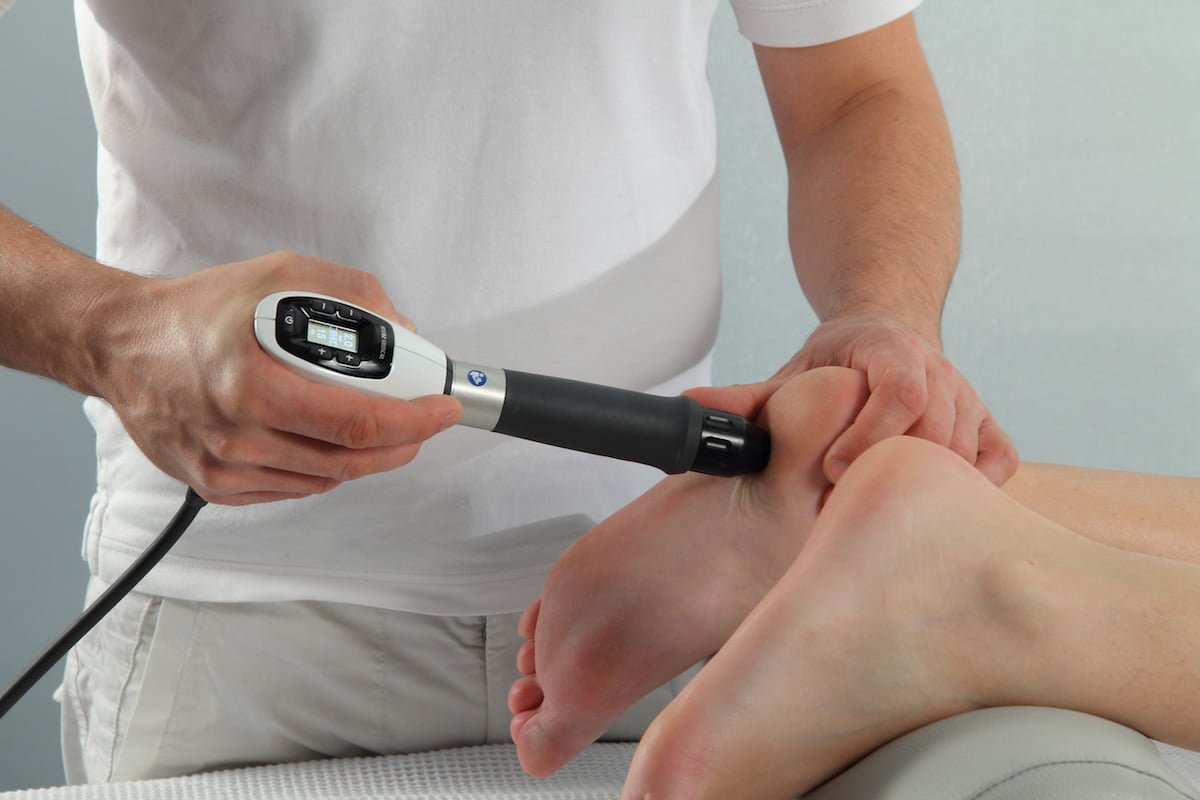
Our therapist will apply shock waves through a specially designed hand piece that produces strong energy pulses for short periods of time. These high energy acoustic waves are transmitted through the surface of the skin directly to the affected tissue areas in a controlled procedure. Pressure waves have a mechanical effect on the tissue which stimulates the cells in the body which are responsible for healing. The micro trauma of the repeated pressure waves creates new blood flow to the area. It is the new blood flow that promotes tissue healing.

Pressure wave therapy produces an acute inflammatory process in the treated tissues. Your body responds by increasing the metabolic activity around the impacted area which in turn stimulates and accelerated the body’s own healing mechanisms.

RELATED: What You Can Do to Make Injuries Heal Faster


Success Stories with Pressure Wave Therapy

Many well-known clinics are using pressure wave therapy to treat a whole host of conditions – the Cleveland Clinic, Johns Hopkins University and Duke University are a few.

The data from research shows that the vast majority of patients with many pain conditions experienced improvement or even complete healing for their pain conditions. Some of the research results include:

  • 91% improvement for shoulder pain
  • 90% success rate for heal pain
  • 77% improvement for elbow pain
  • 76% success rate for achilles pain
  • 8 times more effective for hamstring pain than regular physiotherapy and chiropractic treatment

Other conditions where pressure wave therapy has been successful are: plantar fasciitis, rotator cuff pain, knee pain, foot pain, ankle pain, back pain, neck pain, hand pain and wrist pain. This therapy is continually being expanded to treatment for more areas of the body and more pain conditions.


The Cost-Effectiveness of This Treatment

Compared to many other treatment options, pressure wave therapy can not only be more effective, but less expensive in the long run.

First, there are no medication or surgical expenses. As well, for many other types of treatments, patients pay a $25-40 co-pay and could need as many as 20+ visits to complete their regimen. To compare, a typical plantar fasciitis patient would require physical therapy (PT) three times per week at a $25+ co-pay over months. This can add up to a lot of money quickly…and may still not yield pain relief.

With pressure wave therapy, less treatments are needed. We are packaging our treatment plans to make it easy and inexpensive for you to take advantage of this treatment:

$300 for three sessions

Fourth and fifth session for $50 each

It typically takes three to five sessions (10-15 minutes/session), and this will be our pricing starting in January.

As an introduction for my patients, I’m offering  discounted pricing from now through the end of the year:

$200 for three sessions

Fourth and fifth sessions for $25 each

Again, most patients will require three to five sessions.

So I’m hoping that many of you will consider this treatment option – and spread the word to your friends of family member suffering from one of the pain conditions we believe can improve with pressure wave therapy. For me, it’s one of the most optimistic treatment options I’ve come across in a long time. I am thrilled to offer it – and excited to start helping folks live with less pain or become completely pain-free!


Dr. Sharman

Here are the Three Big Goals When Prescribing Physical Therapy

When you’re in pain, whether due to an injury or recovering from surgery, the last thing you feel like you can take on is physical activity – including physical therapy, which may sound painful. But, that word “therapy” has a healing connotation to it. How could it be bad, then? Well, it isn’t. Most people find that physical therapy is a very impactful way to reduce pain, improve strength, and correct faulty movement patterns. Here at Life Care Chiropractic and Wellness Center, we focus on those three main goals in physical therapy.


Getting You Out of Acute Pain and Inflammation

To help push inflammation out of soft tissue, reduce muscle spasms, and ease pain, we use electric stimulation and ultrasound modalities (methods). These therapies are actually quite relaxing. All you need to do is sit or lay down for about 15 minutes while the electrical stimulation is applied on the affected area. We always adjust the level of stimulation to your comfort.

Ultrasound is then used. This includes applying a warm gel on the affected area. Then, a sound head delivers sound waves into the tissue. We often will use a natural pain relieving gel during this therapy, so you get the benefit of both the ultrasound and the pain relieving effect of the gel. This therapy is done in a private room. Patients often comment that they appreciate being able to sit in peace and quiet during their therapy.


[Related: Why Massage for Pain Relief is So Effective]


Stretching and Strengthening Muscles and Soft Tissue 

Learning how to properly stretch your muscles is a very important step in physical therapy. Aphysical therapyt our office, we have a special rehab area where we teach you how to correctly stretch targeted areas. This helps to increase range of motion or relieve pain. Stretching therapy may be taught standing, sitting, or lying on an elevated platform – depending on the area being stretched. We even have what’s known as a “wobble chair.” It takes your spine through helpful ranges of motion to increase spinal flexibility and hydrate the discs of the spine.

Strengthening the supportive muscles of joints is also very important for increasing your stability and range of motion. Typically, this is done with small hand weights, therapeutic resistance bands, or simple body weight.


Functional Training and Correcting Faulty Movements  

Correcting faulty movements is a key ingredient for decreasing risk of injury and improving overall physical performance. This is actually a really fun form of physical therapy. Here, we identify “weak links” in certain types of movement patterns that you may have. Here’s an example:

A highly competitive female basketball player is prone to knee injury. This is because every time she lands from a jump, her knees migrate inward. In our investigation, we find that she has comparatively weak buttock muscles that allow that type of movement of her knees.

You don’t have to be an elite athlete, though, to have faulty movement patterns. Regular people have them just the same. We love figuring them out and helping you correct them!

So, as you can see, physical therapy shouldn’t be intimidating at all. It all towards getting you back to enjoying all the things you like to do. In many cases, it can even be a fun experience. If you’re experiencing pain due to an injury or have a surgery scheduled and will be in need of physical therapy, please give our office a call and let’s set up a consultation appointment.

How Physical Therapy Modalities Can Be the Icing on the Cake

Of course we are all very familiar with the dramatic healing effects of chiropractic care. However, sometimes patients are in a lot of pain and suffering from acute injury or very chronic, stubborn stress and tension.

We often use physical therapy modalities in patients healing from an acute injury, such as a motor vehicle accident or fall, as it is so effective in reducing pain and inflammation in the soft tissue. However, we also find it very effective in reducing tension and spasm in the chronically stressed and tense patient. A typical example would be the patient who works at the computer all day and has a long commute resulting in extremely tense neck and trap muscles.

We recommend physical therapy modalities for assisting in pain relief, relaxing muscles and pushing out inflammation. These therapies reduce pain and inflammation in the soft tissue as well as reduce tension and muscle spasm – assisting in healing.

Why Massage for Pain Relief Is So Effective

Ahhh … that wonderful feeling you have after a massage. You know it makes you feel good but does massage therapy really help pain and is it beneficial for your body? The short answer is yes. Massage therapy is a great part of the treatment protocol for pain relief and management. And, there’s science behind it and research to back it up. One question I am often asked is “How can massage therapy assist in my recovery from or the management of my pain?” Here’s what you need to know about massage for pain relief: